It’s great to be a bureaucrat. You create lifetime job security for yourself and a sweet taxpayer funded pension. These generous perks come at the expense of everyone driving a new car, paying Federal taxes, or merely holding US dollars.
Best of all, no regular American citizen ever voted for these jokers to have any power to dictate the minimum options that are part of their (very limited) new vehicle choices today.
These are Americans’ new vehicle options today:
- Unaffordable, barely serviceable, quickly depreciating, morbidly obese cars in several colors
- Unaffordable, barely serviceable, quickly depreciating, morbidly obese trucks in several colors
- Unaffordable, barely serviceable, quickly depreciating, morbidly obese SUVs in several colors
- Unaffordable, barely serviceable, quickly depreciating, morbidly obese Crossovers in several colors
Isn’t capitalism great? Oh wait – that’s not capitalism at all – it’s that other ism that starts with an “F.” It really perturbs me when an industry as massively regulated as automotive is slapped with a “free market capitalism” label.
When I say massively regulated – you have no idea. I haven’t even gotten started on the EPA, CARB, and the DOE. Be patient – I will. They’ll get theirs – just you wait.
NHTSA mandated driver and passenger airbags be installed in every passenger vehicle by September 1998. The rule forcing these airbags was published in 1991.
Turns out, these airbags tended to kill some smaller passenger seat occupants when they deployed. Oopsie. The solution: More cost, weight, and complexity, at the direct expense of long term reliability / total cost of ownership. At gunpoint. Of course that’s the solution. That’s always the solution.
Let’s start with Occupant Classification Systems (OCS). AKA “Smart” passenger airbags. I had direct experience in this system as a release engineer at a North American OEM, and as a Field Applications Engineer at a Tier 1 supplier for the parts. This is the “Smart” system that turns the Passenger Airbag off automatically (when it works). The light that the customer sees is know as the PADI (Passenger Airbag Disabled Indicator).
Passenger airbags were forced into the IP over every new car since 1998. Since these mandated explosive devices were killing some smaller occupants, NHTSA mandated that the passenger airbag system automatically detect the size of the occupant. The system would disable the passenger airbag if it decided the occupant was small enough. This “smart” passenger airbag deployment system was mandated to be part of every 2006+ model year vehilce. It is part of FMVSS 208.
You see how this works? One mandate leads to the next. Lifetime job security. Great scam.
You may have noticed even a generous sub sandwich or bag of groceries placed on your passenger seat may light up the PADI.
The rule stated that a 6 year old child must have the airbag automatically disabled, but the airbag needs to turn back on (again – automatically) for a 5th percentile female occupant.
Different manufacturers used different methods to try to accomplish this. Some used silicone filled bladders under the passenger seat. This bladder, when squished by the weight of the posterior sitting on the passenger seat would create a pressure. This pressure was read by a pressure sensor, whose signal fed into the module controlling the airbag’s deployment.
Sounds simple enough, but it doesn’t stop there. Some passenger seat belts have friction “cinching” mechanisms on the lap portion – creating a tension on the lap belt section. This is used to cinch child seats with tension to keep them in place and not flopping around. Why does this have anything to do with the silicone bladder under the passenger seat you ask? Well, this seat belt tension creates additional downward force on the bladder, making it appear (to the pressure sensor) as if a heavier occupant is in the passenger seat.
The solution: Seat Belt Tension Sensors (BTS). These sensors read the lap belt tension at one of the lap belt’s anchor points. Different methods were used: Hall effect sensors, strain gages, etc. The theory was that force created by the seat belt tension would be subtracted from the total force on the bladder.
That’s the theory anyway. In practical applications, there are a massive number of variables between how much seat belt tension is read by the BTS, and how much force this adds to the bladder or weight sensors. The lap belt is at a variable fore/aft angle to the seat depending on seat position. The friction between the seat belt and side of the seat was a wild guess to start and variable after that. The height above the seat cushion for the lap belt is always unknown. This impacts the angle between the side of the seat cushion and the lap belt above the seat cushion. This impacts the force placed on the bladder. I could go on, but this is not meant to be a comprehensive DFMEA of this system.
Other methods were also used to detect passenger’s weight. Strain gages (basically an electronic scale) under the seat frame, etc.
When you want to get an accurate weight of yourself, do you tend to stand on the scale, or sit on it? Now you start to see the challenges with trying to incorporate an accurate scale in any seat.
Why not just put a passenger airbag disable switch in the car and dispose with all this wizardry?
Great question. Here’s the answer: Because NHTSA mandated that this needs to be a passive system. The OEM I worked for wanted to add a key switch to this system for the inevitable cases where the system could not automatically detect the passengers’ size. Rejected.
Here we have an OEM asking NHTSA: Please NHTSA, can we add cost to the system you mandated us to install in order to make it safer? They were rejected.
That’s when my red pill moment started.
NHTSA does not care about safety. They only care about submission. Submit. Obey. Comply. Respect my authoritah!!!!
NHTSA does not care about poor and middle class people. NHTSA has utter contempt for poor and middle class people. Why?
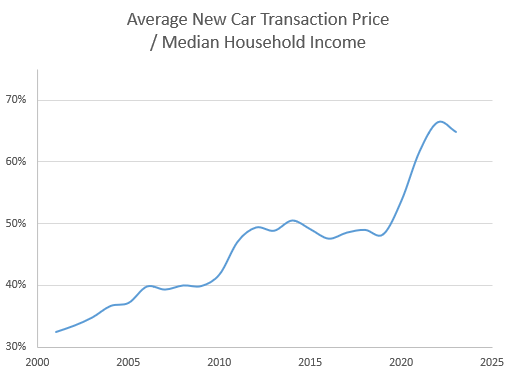
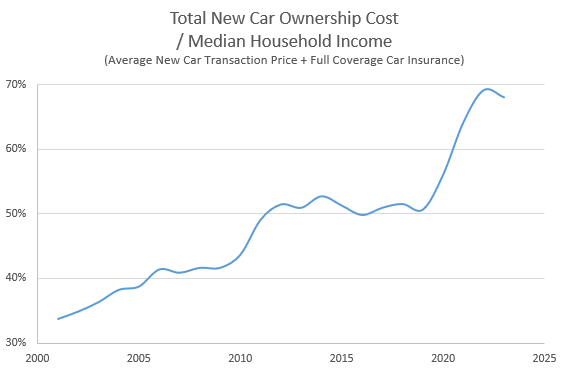
Because poor and middle class people can not afford any new car today. Don’t get me wrong, they may qualify for financing a new car. But they definitely can’t afford one. Even the lowest cost ones today are a bad deal for poor and middle income people.
Poor and middle class people are increasingly being forced to buy 25+ year old hoopties. If they live in the Midwest, the selection of 25+ year old hoopties is nearly non-existent due to decades of salt exposure – rusting them into the scrapyard. 25+ year old hoopties also have the benefit of their OEM service parts having been discontinued 15+ years ago.
Good luck servicing this system when it breaks. You’re looking at 4 figures minimum, for a system whose sole purpose could have been implemented with a $5 switch.
Thanks for forcing those hoopties on the masses NHTSA!

 Social media is killing you